If you’re researching automotive franchise opportunities, you’re not just comparing brands you’re comparing business models, startup requirements, staffing realities, revenue mix, and long-term fit. Some automotive concepts are built around speed and volume. Others depend on heavy equipment, or specialized labor.
This guide walks through the automotive franchise categories that matter most, what to look for when comparing them, and why auto restyling concepts like Black Optix Tint deserve a closer look.
Most automotive franchise opportunities fit into these buckets:
Your category choice affects:
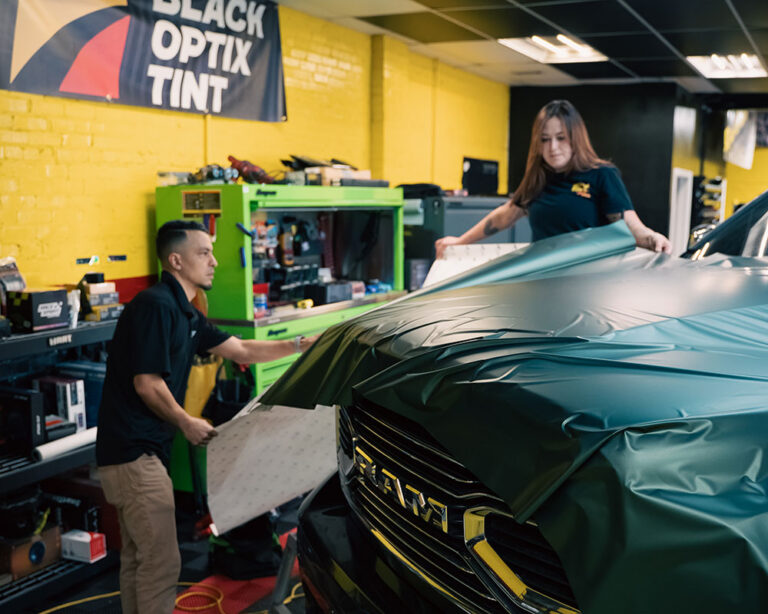
For many buyers, the most interesting automotive franchise opportunities are not the most traditional ones. Appearance and auto restyling concepts give owners a chance to compete in a category where presentation, service quality, customer trust, and premium positioning matter.
That creates a business model with multiple ways to generate revenue from one customer relationship instead of relying on a single transaction type. It also creates a stronger upsell path than many single-service concepts.
The strongest automotive franchise opportunities usually have a few things in common:

You should understand how the business makes money, what services drive demand, and where upsell opportunities come from.

Not every buyer wants a repair-heavy business with large teams, advanced diagnostics, and difficult labor challenges. Some buyers are better suited to concepts with cleaner workflows and a more manageable service model.

Automotive customers want visible proof before they spend money. Strong reviews, before-and-after content, professional presentation, and a polished customer experience matter.

A franchise should offer more than brand recognition. It should provide systems for training, quality control, customer experience, vendor relationships, and growth.

The real test of a franchise opportunity is what happens after launch. Buyers should look for ongoing coaching, marketing support, operational guidance, and systems that reduce trial and error.
It’s tempting to assume that certain automotive franchise categories are automatically more profitable than others. Two brands in the same category can perform completely differently, because profitability is driven by the operating model behind the service, not the service itself. The franchises that tend to outperform have a few fundamentals in common:
A category can be hot and still be a risky investment if:
Use the “great vs risky” framework to better understand your options: great vs risky opportunity checklist
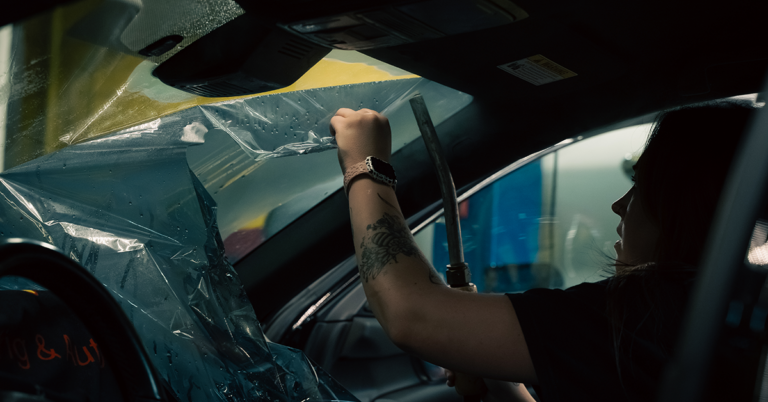
The U.S. automotive aftermarket is a $400+ billion industry, and the auto restyling segment — window tinting, paint protection film, ceramic coating, and audio installation — is one of its fastest-growing categories. Unlike food franchises or retail, automotive restyling businesses have:
| Feature | Black Optix Tint | Typical Independent Shop |
|---|---|---|
| Brand recognition | National — growing | Local only |
| Training | Full pre-open + ongoing | Self-directed |
| Marketing support | System-wide campaigns | You build it |
| Supplier pricing | Group buying power | Retail pricing |
| Proven systems | SOPs for every service | Reinvent the wheel |
| Territory protection | Exclusive territory | None |
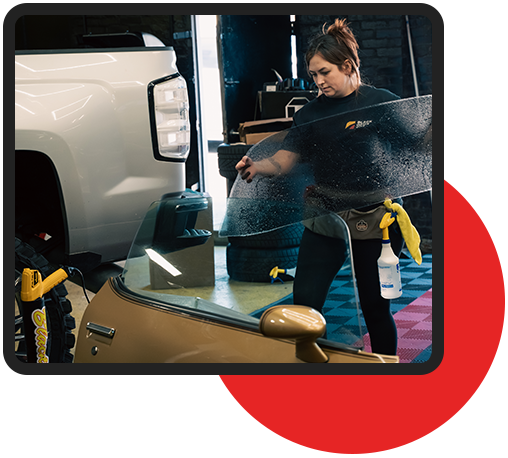
In automotive, customers are trusting you with:
The categories that win tend to have:
That’s why reputation systems matter as much as the service itself.
Black Optix Tint is not positioned as a general repair concept. It is built around premium automotive appearance services that are highly visual, customer-facing, and easier to showcase through reviews, photos, and local marketing. Black Optix provides owners with five distinct revenue streams, training and support around site selection, vendors relationships and negotiated pricing, inventory, and pre-launch marketing. Learn more about available territories, investment, and training and support.
Not all automotive franchise opportunities carry the same startup profile. A repair business, quick-lube concept, tire store, and appearance-focused model can differ significantly in buildout, equipment, labor, and working capital requirements. If you’re evaluating the category, investment is the next step to review carefully.
If you are looking for an automotive franchise opportunity in a premium service category with multiple revenue streams, strong visual marketing potential, and franchise support designed to help owners launch and grow, Black Optix Tint is worth evaluating. The model is especially relevant for buyers who want exposure to automotive services without pursuing the heavier complexity of a traditional repair-first concept.
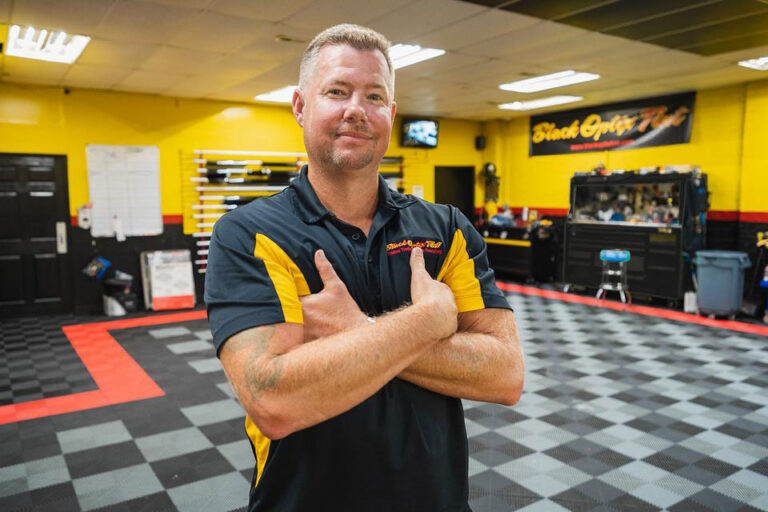
Black Optix Tint was founded by Randal Moore, who opened his first automotive restyling shop and scaled it into a national franchise system without outside investors or a corporate parent company. Every process in the Black Optix Tint franchise playbook was developed by someone who has actually run the operations — hired the techs, served the customers, and dealt with the day-to-day reality of running a tint shop.
When Randal made a promise to franchisees that they would have real support from real operators, he meant it.
The best automotive franchise opportunities are the ones that combine a strong business model, clear customer demand, manageable operational complexity, and solid franchise support. Some buyers are drawn to repair and maintenance concepts, while others prefer appearance-based businesses that offer premium services and multiple revenue streams. The right opportunity depends on your goals, your preferred level of day-to-day involvement, and the kind of automotive business you want to build. For many franchise buyers, the best opportunities are the ones that offer differentiation, strong local marketing potential, and room to grow.
The most profitable automotive franchises are not always tied to one category. Profitability can be influenced by the business model, service mix, pricing strategy, labor requirements, location quality, operational discipline, and local market demand. Some automotive concepts rely on recurring maintenance visits, while others generate revenue through premium services, upgrades, and package selling. When evaluating profitability, buyers should look beyond broad claims and focus on how the business makes money, what costs drive operations, and whether the franchise model is designed to support long-term performance.
There are several types of automotive franchises, including repair and maintenance, quick-lube and oil change, tires and wheel services, collision and body, car wash, detailing, glass, and appearance or restyling concepts. Each category comes with a different operating model, startup profile, staffing need, and customer relationship. Some are built around essential maintenance and high transaction volume, while others focus on premium service, vehicle protection, and visual upgrades. Understanding the different categories is an important first step in identifying which type of automotive franchise opportunity fits your goals.
An automotive franchise opportunity may be riskier if the business model is unclear, startup costs are difficult to understand, labor demands are high, support is limited, or the concept depends too heavily on one service or one type of customer demand. Buyers should pay close attention to the franchise’s support system, service mix, training, market strategy, and how clearly the brand explains the path from signing to opening. It also helps to evaluate whether the concept fits your background, whether the category is easy to market locally, and whether the operational demands match your goals. Strong franchise opportunities tend to be transparent, structured, and built around repeatable systems rather than broad promises. For more on how to evaluate automotive franchise opportunities read our post on Automotive Franchise for Sale: How to Tell a Great Opportunity from a Risky One.
Black Optix Tint was founded by Randal Moore, an operator who built and scaled the brand from the ground up. Our franchisees get real operational playbooks developed by someone who has actually run these locations — not a corporate team that has never tinted a window.
Black Optix Tint locations offer window tinting, paint protection film (PPF), ceramic coating, and car and marine audio installation. Multiple revenue streams from day one.
An automotive appearance franchise focuses on enhancement, protection, and presentation rather than diagnostics and mechanical repair. Auto repair businesses typically require more technical labor, more complex equipment, and have higher operational costs. Appearance-based concepts are often more visual, easier to market locally, and more naturally positioned for premium service packages.
When comparing automotive franchise opportunities, look beyond brand recognition. Evaluate the business model, service mix, startup complexity, labor requirements, local demand, support systems, and long-term growth potential. The strongest opportunity is usually the one that best aligns with your goals, experience, and preferred level of operational involvement and investment.
Black Optix Tint can be a strong fit for entrepreneurs who want to own a customer-facing automotive business in a premium service category. It may appeal to owner-operators, business-minded professionals, sales-oriented leaders, and multi-unit buyers who value brand presentation, service quality, and multiple revenue streams. Black Optix Tint also offers conversions of existing tint businesses as well as co-brand opportunities designed to add tint as a complement to other automotive services businesses.
No, you don’t need to have prior to automotive or tinting experience to own a Black Optix Tint franchise. What matters more is leadership ability, business discipline, customer focus, and the willingness to follow a proven system. Franchise training and support are designed to help owners understand the model and operate effectively.
Some franchise buyers prefer appearance-based automotive franchises because they offer a different model than traditional repair businesses. These concepts are often more visual, easier to market through reviews and before-and-after content and better suited for premium positioning. They can also create multiple revenue opportunities from one customer relationship.
Location is a major factor in any automotive franchise opportunity. Visibility, access, parking, surrounding businesses, traffic patterns, and local market strength can all influence performance. For an appearance-based automotive business, location also plays an important role in convenience, brand awareness, and customer acquisition.
Black Optix Tint is designed to support franchisees through the launch and growth process. Support may include training, site selection guidance, vendor relationships, equipment and inventory planning, store setup, pre-opening preparation, and ongoing operational support. For many owners, that support is one of the key advantages of franchising over starting independently.
If you are evaluating automotive franchise opportunities, reviewing cost and investment is an important next step. Automotive franchise cost can vary based on the business model, buildout, equipment, labor profile, and working capital needs. Black Optix Tint’s investment information provides more detail on startup considerations and the financial side of the opportunity.
Use our territory map or contact our franchise development team. We have available territories across the U.S. and are expanding internationally. Some major markets go quickly.